appsworld North America 2015 at Moscone Center West, San Francisco

appsworldlogo

I’m a confirmed speaker at the appsworld North America 2015 at Moscone Center West, May 12-13 in San Francisco, CA.  Discover the future of multi-platform apps. See all confirmed speakers. This sure will be an exciting event. I’m still working on my presentation that will include Redis, Amazon AWS, C#, and more. I will see you there.

Presenting “Object Persistence in C#” in Sacramento, CA, March 25th, 2015

Wednesday, March 25th, 20015, I will be presenting “Object Persistence in C#” at the Sacramento .NET User Group (SAC.NET) at the Microsoft Office at 1415 L Street, Suite 200, Sacramento, CA 95814 starting at 6:00 pm. Maria Martinez, Co-Organizer, Sacramento .NET User Group, was kind enough in helping to get this organized. Thank you Maria. I will see you there.

Presenting “Object Persistence in C#” at Bay.NET User Group on April 9th, 2015

I will be presenting “Object Persistence in C#” at the Bay.NET user group at the Berkeley City College located at Room 451A, 2050 Center Street, Berkeley, CA from 6:15 pm – 9:00 pm.

Deborah Kurata, Co-Organizer, East Bay Chapter Leader, was kind enough in helping to get this organized. Thank you Deborah.

I will see you there.

Object Persistence, Part 5 – Video – Redis Provider

In part 4 of this series, I went through the entire Visual Studio solution and also showed the db4o object database provider.

In part 5, I’ll show you how to store your Plan Old C# Objects (POCO) into Redis using the Redis Cloud at redislabs.com service. We will build the Redis Provider and take it out for a spin storing our new domain objects.

You can download the source code at GitHub.

Object Persistence, Part 4 – Video

In part 3 of my Object Persistence series, I introduced the complete Visual Studio 2012 source code.

This is part 4 of my Object Persistence series. I created a detailed video that goes thru all the parts in the solution. Enjoy! Make sure you continue with part 5 where we build a Redis persistence provider.

Watch the video walkthrough on my YouTube channel:

Object Persistence, Part 3 – Source Code

In part 2 of my Object Persistence series, I’ve touched on the issues that still exist today.

In part 3, I’ve published a complete sample Visual Studio 2012 solution on GitHub that demonstrates object persistence using a db4o persistence provider. Over time, I will add additional sample persistence providers for Redis, SQL Server, and possibly a NoSQL provider such as SimpleDB (one of Amazon’s great NoSQL databases).

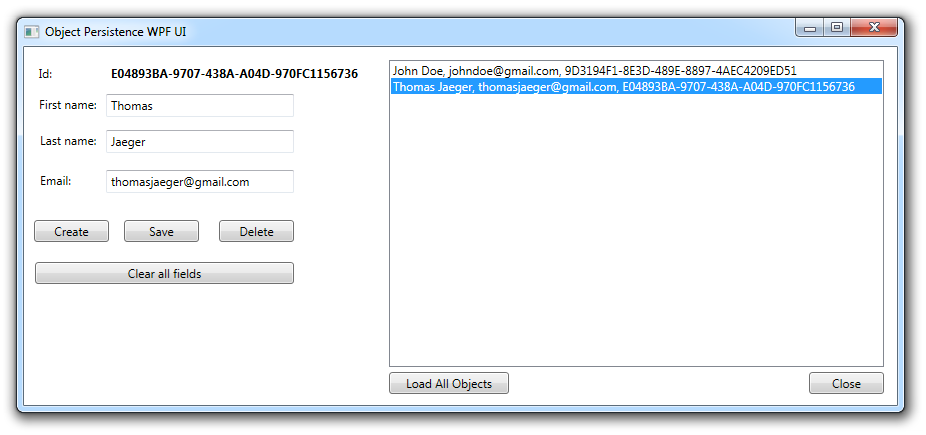
This sample solution includes complete server side and client side layers. The Server side runs as a REST based Web API 2 service. The server portion also includes a simple domain model and, of course, the persistence provider and how it is implemented. I will update the solution over time, expand the domain model, UI, etc. as required.

The client side is a WPF application that consumes the REST service. The payload to and from the REST service is via JSON objects.
ObjectPersistencePart3_WPF

I hope you like it. You can use this sample solution as a template to start simple or very complex software solutions. This solution can easily be taken and split across different nodes in a cluster of Amazon AWS EC2 instances, for example. However, for a cloud based solution, your persistence would have to support certain features. I will go into details when I add the Redis persistence provider.

Instead of writing a very long blog post, I will post a screen cast video and go through the solution. I think this will make more sense and you have a chance to go through the source code with me. So, go ahead and get the latest version from GitHub and start playing with it.

How to turn on Long Polling on an AWS SQS Queue

The following code snippet will allow you to configure an AWS SQS queue for long polling using the ReceiveMessageWaitTimeSeconds attribute. For more information about Amazon long polling, see here:

http://docs.aws.amazon.com/AWSSimpleQueueService/latest/SQSDeveloperGuide/sqs-long-polling.html

// 5. Set Queue attributes
// The API Version 2012-11-05 of Amazon SQS provides support for long polling. (.net sdk v2)
// In the AWS console, you can verify in "Receive Message Wait Time" value of the queue
SetQueueAttributesRequest setQueueAttributesRequest = new SetQueueAttributesRequest();
List<Amazon.SQS.Model.Attribute> attributes = new List<Amazon.SQS.Model.Attribute>();
Amazon.SQS.Model.Attribute attribute = new Amazon.SQS.Model.Attribute();
attribute.Name = "ReceiveMessageWaitTimeSeconds";
attribute.Value = "20"; // 0 to 20 Seconds, default is 0
attributes.Add(attribute);
setQueueAttributesRequest.QueueUrl = queueUrl;
setQueueAttributesRequest.Attribute = attributes;
_sqs.SetQueueAttributes(setQueueAttributesRequest);

How to create an Amazon AWS SNS Topic and an SQS Queue that subscribes to it

Creating powerful cloud-based systems in C# and the .Net framework are possible for a long time now. Architecting a messages based cloud-computing solution that can handle millions of requests per day is not an easy undertaking but much easier when you use Amazon AWS services.

I recently needed to create an Amazon AWS SQS queue programmatically that subscribes to an SNS Topic that was also created programmatically. I could not find any examples in C# so I decided to post this code from one of my cloud-computing systems that I had designed and hope others find it useful. This particular code was used to test the dynamic nature of a messages based backend that can expand and contract the number of SQS queues based on how many active EC2 instances (nodes) in the cluster are available.

This code also shows how to create a policy for the SQS queue so that it will receive the messages from the SNS service. If you do not set a correct policy, the queue won’t receive any messages nor any exceptions are thrown.

Declaration code:

        private AmazonSimpleNotificationServiceClient _sns;
        private const string SNS_TOPIC = "YourTopicHere";
        private string _AWSSNSArn;

Core C# code:

            // 1. Create an Amazon SNS topic
            AmazonSimpleNotificationService sns = new AmazonSimpleNotificationServiceClient(RegionEndpoint.USWest1);
            _AWSSNSArn = sns.CreateTopic(new CreateTopicRequest
            {
                Name = SNS_TOPIC
            }).CreateTopicResult.TopicArn;

            // 2. Create the Amazon SQS In-Queue, will ignore it if it already exists
            AmazonSQS sqs = AWSClientFactory.CreateAmazonSQSClient(RegionEndpoint.USWest1);
            CreateQueueRequest sqsRequest = new CreateQueueRequest();
            sqsRequest.QueueName = General.IpAddressAWSFriendly;
            string queueUrl = sqs.CreateQueue(sqsRequest).CreateQueueResult.QueueUrl;
            GetQueueAttributesRequest getQueueAttributesRequest = new GetQueueAttributesRequest();
            List list = new List();
            list.Add("QueueArn");
            getQueueAttributesRequest.AttributeName = list;
            getQueueAttributesRequest.QueueUrl = queueUrl;
            GetQueueAttributesResponse response = sqs.GetQueueAttributes(getQueueAttributesRequest);
            string queueArn = response.GetQueueAttributesResult.QueueARN;

            // 3. Configure the Amazon SNS topic to publish to the SQS queue
            sns.Subscribe(new SubscribeRequest
            {
                TopicArn = _AWSSNSArn,
                Protocol = "sqs",
                Endpoint = queueArn
            });

            // 4. Set the queue policy to allow SNS to publish messages
            ActionIdentifier[] actions = new ActionIdentifier[2];
            actions[0] = SQSActionIdentifiers.SendMessage;
            actions[1] = SQSActionIdentifiers.ReceiveMessage;
            Policy sqsPolicy = new Policy()
                .WithStatements(new Statement(Statement.StatementEffect.Allow)
                                    .WithPrincipals(Principal.AllUsers)
                                    .WithResources(new Resource(queueArn))
                                    .WithConditions(ConditionFactory.NewSourceArnCondition(_AWSSNSArn))
                                    .WithActionIdentifiers(actions));
            SetQueueAttributesRequest setQueueAttributesRequest = new SetQueueAttributesRequest();
            List attributes = new List();
            Amazon.SQS.Model.Attribute attribute = new Amazon.SQS.Model.Attribute();
            attribute.Name = "Policy";
            attribute.Value = sqsPolicy.ToJson();
            attributes.Add(attribute);
            setQueueAttributesRequest.QueueUrl = queueUrl;
            setQueueAttributesRequest.Attribute = attributes;
            sqs.SetQueueAttributes(setQueueAttributesRequest);

B7 Tool Update – Backup on Amazon S3 and 7-Zip

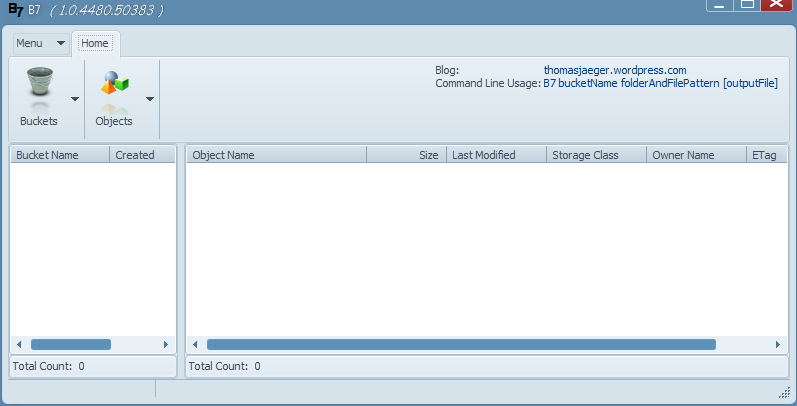
I updated my B7 tool for Amazon S3 and 7-Zip. You can now create buckets and upload files. You can still use it as a command line tool as well. I also re-did the user interface to what I believe a more user friendly version. This tool is free. Please let me know what you think.

Download B7 here.

To get started with Amazon S3 storage, click here.

B7 - Backup to Amazon S3 and 7-Zip